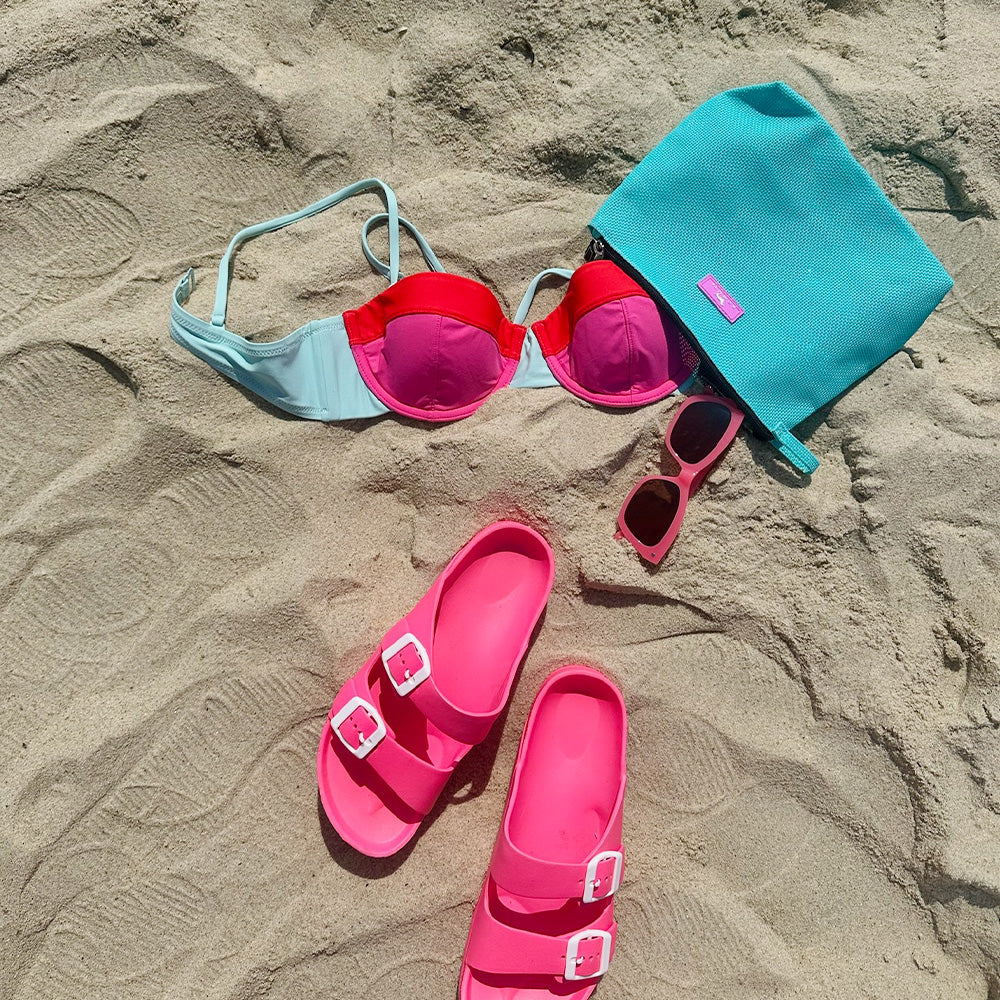

Planning a pool or beach day usually starts simple—and quickly spirals. You start with just the usual beach bag essentials, like sunscreen, a towel, maybe a snack, and somehow end up packing like you’re relocating for the weekend. Towels multiply, extra clothes appear out of nowhere, oversized pool toys sneak in—and of course, that book you’ll probably never read.
If you’ve ever carried a sagging, damp-smelling tote across a parking lot, you already know: not all women’s beach bags are built for real life. It’s less about appearance and more about performance.
Let’s get into what actually works—beyond the cute wicker styles, the classic straw tote, or even that eye-catching pink bag.
Waterproof vs. Water-Resistant: What’s the Real Difference?
These terms get used interchangeably, but they’re not the same.
Waterproof means fully sealed (no water in or out). They usually come with thicker materials, sealed seams, and a slightly more rigid feel. Think dry bags for boating.
Water-resistant repels water, dries quickly, and stays lightweight. It handles splashes, damp towels, and the occasional juice-box disaster without becoming a soggy mess. Here’s what matters: water-resistant bags are lighter, easier to carry, and handle real-life messes.
Keep in mind that the label isn’t everything. Fabric matters more—a tightly woven material or a lightly coated fabric can outperform a poorly made “waterproof” bag. And that’s exactly where things are heading: lighter, more flexible materials for everyday use.
In fact, the global waterproof breathable textiles market continues to grow steadily, increasing from $2.29 billion in 2025 to $2.41 billion in 2026, reflecting rising demand for fabrics that balance protection and comfort. Membrane-based (fully waterproof) materials even accounted for 64.83% of the market in 2025, while lighter, water-resistant options are quickly gaining ground for everyday use.
When You Actually Need Waterproof
There are times when a waterproof beach bag is the right call.
If you’re boating, kayaking, or caught in heavy rain, you want that full seal. The same goes if you’re carrying electronics in an environment where everything is guaranteed to get soaked.
When Water-Resistant Is More Than Enough
Pool days, beach trips, farmers markets, grocery runs after the beach—the bag that goes everywhere and wipes clean in a snap.
A water-resistant beach bag can handle damp towels, sunscreen leaks, and the occasional splash without weighing you down. It dries quickly, stays lightweight, and won’t trap that lingering “wet bag” smell.
What Should Actually Fit in Your Beach Bag?
At a minimum, your beach bag should comfortably hold:
-
One or two towels (this is the real test)
-
Sunscreen, lip balm, SPF chapstick
-
Snacks and drinks (especially if kids are involved)
-
A change of clothes
-
Phone, keys, wallet
Optional—but very real additions:
-
A book you may or may not open
-
A small Bluetooth speaker
-
Kids’ pool toys that somehow take up half the space
If your bag can’t handle towels and everything else without turning into a black hole, it’s not doing its job.
Size Guide: Small, Medium, Large — Which One Do You Need?
Not every day requires the same level of packing. Here’s how to think about it:
Small
A small beach bag can be perfect for solo trips or quick dips. Think sunscreen, wallet, phone, maybe a lightweight towel. Easy to carry, often crossbody-friendly, and great when you’re traveling light.
Medium
The sweet spot for many people. Ideal for a couple or a solo outing where you want options—snacks, an extra layer, maybe that book. It holds more without feeling oversized—think an easy, everyday option like a summer woven style that still keeps things practical.
Large
This is your family beach bag. Multiple towels, snacks, drinks, backup snacks, and at least one “just in case” outfit. If you’ve ever said, “I’ll just carry everything,” a large beach bag is your size.
Bag Styles Worth Knowing (and What They’re Actually Good For)
Not all beach bags are created equal. Some look great, like a small straw beach bag. Some work great, like a big woven beach bag. A few manage both.
Tote Bags
Open top, easy access, generous capacity. These are the go-to for families and anyone who packs like they’ve been burned before. The key is structure—something that doesn’t fold the second you set it down.
Zip-Top Bags
If you like things contained, this is your style. Zippers help keep sand out and prevent everything from spilling when the bag tips over (because it will, at some point). Great for staying organized.
Straw, Woven & Rattan Bags
This is the cute beach bag type, no argument there. Straw, woven, crochet, and rattan styles all bring that effortless look, but they’re not water-resistant, and they’re not easy to clean. Think of these as your “extra” bag—great for a cover-up and sunglasses, not for the full load.
Mesh Bags
Excellent for wet items and pool toys. Sand falls right through, which sounds great until you realize smaller items do too. Best used as a secondary bag or for very specific purposes.
What Makes a Beach Bag Actually Worth It
This is where function wins. Look for a bag that:
-
Has a wipeable interior—because sunscreen leaks, snacks crumble, and... life happens
-
Stands upright on its own—no one wants to chase a tipping bag across hot concrete
-
It's lightweight—you’re already carrying enough
-
Dries quickly—no lingering dampness, no weird smells
-
Has some structure—so you can find your things without digging for five minutes.
It doesn’t need to be complicated. It just needs to work.
How to Pack Your Beach Bag Like You’ve Done This Before
A little strategy goes a long way.
Keep heavy items on the bottom for balance, roll towels to save space, and stash keys and your phone in a zip pocket. Use a pouch for snacks, and separate wet items so they don’t soak everything else.
It’s not about perfection—just making the day feel a little less chaotic.
The Bottom Line
Here’s the thing—you’re not just packing a bag; you’re setting yourself up for a good day. For a few hours where everyone’s fed, sunscreened, and relatively happy. Where you might actually sit down for a minute—even if you don’t open that book.
And yes, the whole water resistant vs waterproof debate matters—but mostly so you can choose what actually works for your routine.
The best beach bag won’t make things perfect, but it cuts down on the mess, the digging, and the stress—so you can spend more time enjoying.